.png)
STATE HOUSE, BOSTON, June 17, 2026.....As Bay Staters run up their credit cards to attend a slew of summer events, a senator is proposing restrictions to curb climbing ticket resale prices. And the idea is stirring debate among consumer groups who say it would limit consumer choice and empower ticketing giants that are largely responsible for the high prices.
Sen. Dylan Fernandes, a Falmouth Democrat, filed legislation (SD 3994) dubbed "An Act to make Noah Kahan tickets affordable for the rest of us" that proposes a cap on ticket resale prices at 110% of their original price. Its title references the rising resale ticket prices for concerts popular singer-songwriter Noah Kahan is holding at Fenway Park this summer.
While lawmakers are trying to address the soaring costs of housing, energy and health care, Fernandes said the Legislature should also focus on "funflation," or inflation tied to activities people enjoy like concerts and sporting events.
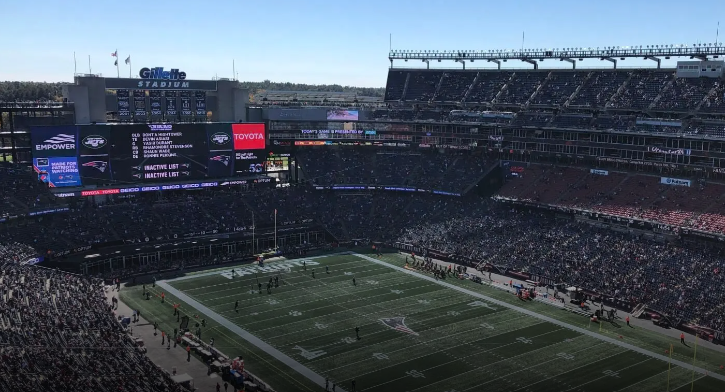
Tickets for Kahan's sold-out concerts in July start at around $500 on secondary ticket selling platforms like StubHub and Vivid Seats. Soccer fans who have flocked to Massachusetts to watch the FIFA World Cup matches at Gillette Stadium - temporarily renamed Boston Stadium - are also facing steep resale prices with tickets for some matches starting at upwards of $1,000.
These kinds of prices are "incredibly unaffordable for regular people, for myself, for anyone who would like to enjoy a show," Fernandes told the News Service.
"I love music. I would love to go to a show affordably and I can't afford to do that right now. My peers, my millennial peers, cannot afford to do that right now," said Fernandes, who is 36.
Vermont lawmakers passed a bill similar to Fernandes' bill in May, which Kahan backed in a video he sent to lawmakers.
"As an artist that cares very deeply about the fan experience and accessibility of concert tickets, this bill is a critical step in eliminating predatory resale behaviors and offering Vermonters a great solution for exchanging and reselling tickets in a safe marketplace," Kahan, a Vermont resident, said in the video.
Both bills ban deceptive website addresses and implying that a venue or artist has endorsed the reseller without their written consent. Vermont's bill also prohibits the selling or offering of "speculative tickets," which is a ticket a person does not possess or own when they list it for sale. A staffer for Fernandes said his office is researching whether and how speculative ticket policies should be included in the legislation.
"I think it can be helpful when states very similar to us enact a policy for our state to take a look at it and take it a lot more seriously," Fernandes said.
Other states, including California, are considering similar proposals. Last year, Maine passed a law capping ticket resale prices at 110%. However, that state's attorney generalfound the price cap only applies to service fees and charges.
Opponents say price caps can lead to higher rates of fraud and limit competition in the primary market that is already under ticketing giant Live Nation Entertainment's stronghold.
They say price caps may steer customers away from safer – albeit often pricier – secondary market vendors to unregulated markets where there is no guarantee a buyer will get their tickets, or a refund if they don't.
"There are incentives for the marketplace to operate efficiently and transparently and safely that just don't exist under a price-capped market," said Brian Hess, executive director of Sports Fan Coalition.
Fernandes said consumer fraud is a "worry for sure" and he's more focused on the "obscene" ticket prices that are sidelining residents from events.
"The status quo is clearly broken," he said.
Consumer groups say lawmakers should crack down on the root cause of high ticket prices: a lack of competition in the primary ticket market.
"Massachusetts lawmakers should focus on what's driving high prices in the first place: a consolidated marketplace with too little competition and too little transparency," Geoff Vetter, a spokesperson for the Coalition for Ticket Fairness said in a statement. "That's the problem we need to focus on.”
Consumer groups have backed ill-fated legislation (H 320 / S 191) that sought to ease restrictions enacted as part of a 2024 economic development law. Both bills, which would allow consumers to transfer or resell paperless tickets at "any price, any time and without additional fees," were sent to a study order by the Committee on Consumer Protection and Professional and Licensure earlier this year.
Fernandes' proposal, which is awaiting a committee assignment, faces an uphill battle as lawmakers have less than two months to pass laws or get them into a conference committee. It's a reality Fernandes has accepted.
"Look, I mean, it's pretty late in the session, so you know, are the prospects high of passing? No," he said. "Most bills don't pass in the first session that they're filed. [You always] have to do a lot of work around raising awareness around legislation before you get something through, and it's never too early to start that work."